7 Factors That Affect How Much a 3 Ton Air Conditioner Does Cost
You’ll find seven key factors affecting the cost of a 3-ton AC unit: proper sizing to match your space, the type of system you choose like split, packaged, heat pump, or ductless, and energy efficiency ratings such as SEER that impact upfront and long-term costs.
Installation challenges like electrical upgrades and permits also play a role, along with necessary ductwork modifications. Don’t forget regional labor rates and seasonal demand fluctuations can affect pricing too.
Finally, optional features or upgrades can add to the cost. Understanding these factors helps you budget accurately and avoid surprises as you explore your options further.
What Is a 3 Ton AC Unit and Why Size Matters
When selecting an air conditioner, understanding what a 3-ton AC unit entails is crucial because it directly impacts your home’s cooling efficiency. A 3-ton AC unit provides a cooling capacity of about 36,000 BTUs of heat removal per hour. This size is ideal for homes ranging from 1,500 to 2,100 square feet.
Proper sizing guarantees the unit matches your home’s load, considering factors like insulation quality, ceiling height, and layout. Without professional load calculation, such as a Manual J assessment, you risk comfort issues, increased energy costs, and premature wear on your HVAC systems.
Oversizing or undersizing disrupts energy efficiency and system longevity.
How System Type Influences 3 Ton AC Unit Costs
When you’re picking out a 3-ton AC unit, you’ll probably notice that split systems usually cost less upfront compared to packaged units. That’s mainly because their installation is simpler and less involved.
On the other hand, heat pumps tend to come with a higher price tag. But they’re worth considering since they provide both heating and cooling, which can save you money in the long run.
Ductless systems can be a bit trickier when it comes to cost. Their price varies a lot depending on how many indoor units you need, which can really affect your total installation expenses.
Split Versus Packaged
Choosing between split and packaged systems greatly influences the overall cost and performance of a 3-ton air conditioner.
Split systems have separate indoor and outdoor units, which usually means higher installation costs, ranging from $4,000 to $8,500. This is because they often require complex ductwork and modifications.
But here’s the good part: split systems offer greater customization and higher SEER ratings. That means they’re more energy efficient and can reduce your operational costs over time. So, you can expect significant long-term energy savings with these systems.
On the other hand, packaged units put all the components into one outdoor unit. This setup simplifies installation and often lowers the cost of the AC unit itself. Since they generally cost less upfront and need less ductwork, packaged units can be easier on your wallet initially.
However, keep in mind that packaged units usually don’t offer as many energy-efficient options or customization features as split systems.
Heat Pump Premiums
Although heat pumps provide both heating and cooling capabilities, they come with higher upfront costs compared to traditional air conditioners. For a high-efficiency 3-ton air conditioner heat pump, expect a base cost between $3,500 and $5,000 due to its dual functionality.
Installation can add $2,000 to $4,000, especially if new ductwork is required, greatly increasing your total expense.
Heat pumps typically feature SEER2 ratings above 18, which enhances efficiency and reduces long-term energy bills. Plus, many models qualify for federal tax credits, so that can help offset some of the initial cost.
Keep in mind that regional labor rates vary and can sometimes reach $150 per hour. This will affect your installation expenses.
Understanding these factors will help you evaluate the true cost and benefits when choosing a heat pump system.
Ductless System Costs
Heat pumps offer combined heating and cooling, but if you’re focused solely on efficient cooling without existing ductwork, ductless mini-split systems present a compelling alternative. A ductless 3-ton AC unit boasts high SEER ratings (often 18+), maximizing energy efficiency and promising long-term savings.
Although upfront costs range from $3,000 to $15,000, installation flexibility reduces labor costs by eliminating ductwork expenses. Zoned cooling enables precise temperature control, optimizing comfort and utility usage.
| Factor | Impact on Costs |
|---|---|
| Upfront Costs | Higher than traditional units |
| SEER Ratings | Superior energy efficiency |
| Installation Flexibility | Lowers labor costs |
| Zoned Cooling | Enhances temperature control |
Choosing ductless mini-split systems balances initial investment with operational savings and installation adaptability. It’s a smart choice if you want efficient cooling without the hassle of ducts.
How Energy Efficiency Ratings Affect Your AC Price
Your AC’s SEER rating plays a big role in how much you’ll pay upfront. Generally, the higher the rating, the more expensive the unit is at purchase.
But here’s the thing: even though models with SEER ratings above 18 might cost more initially, they usually save you a lot of money over time by cutting down your energy bills.
SEER Rating Impact
When you choose an air conditioner, the SEER (Seasonal Energy Efficiency Ratio) rating plays an essential role in determining both the unit’s price and long-term operating costs. A 3-ton AC unit with a SEER rating of 14.3 typically costs between $2,000 and $3,000.
High-efficiency models (SEER 18+) range from $3,500 to $5,000 but offer superior energy efficiency and qualify for federal tax credits. This higher initial investment reflects the unit’s ability to deliver significant energy savings, reducing operating costs over time.
| SEER Rating | Estimated Cost |
|---|---|
| 14.3 (Basic) | $2,000 – $3,000 |
| 16+ (High-Efficiency) | $3,000 – $3,500 |
| 18+ (Premium) | $3,500 – $5,000 |
Understanding SEER ratings helps you balance upfront costs with energy efficiency benefits. It’s all about finding the right fit for your budget and energy goals.
Long-Term Savings
Although higher-efficiency air conditioners with SEER2 ratings between 16 and 20+ come with increased upfront costs, typically ranging from $3,500 to $5,000, they offer substantial long-term savings through reduced energy consumption.
When you invest in a 3-ton AC unit with superior energy efficiency, you benefit from lower cooling costs. Each point increase in SEER2 rating can reduce annual cooling costs by 10-20%.
Plus, there are federal tax credits of up to $600 that can help offset your initial investment, making your return on investment even better.
On top of that, you get reduced utility bills and improved comfort. Energy efficiency not only cuts expenses but also guarantees consistent indoor temperature control.
All these factors work together to recoup the higher investment costs within a few years.
What Installation Challenges Can Increase Your AC Costs
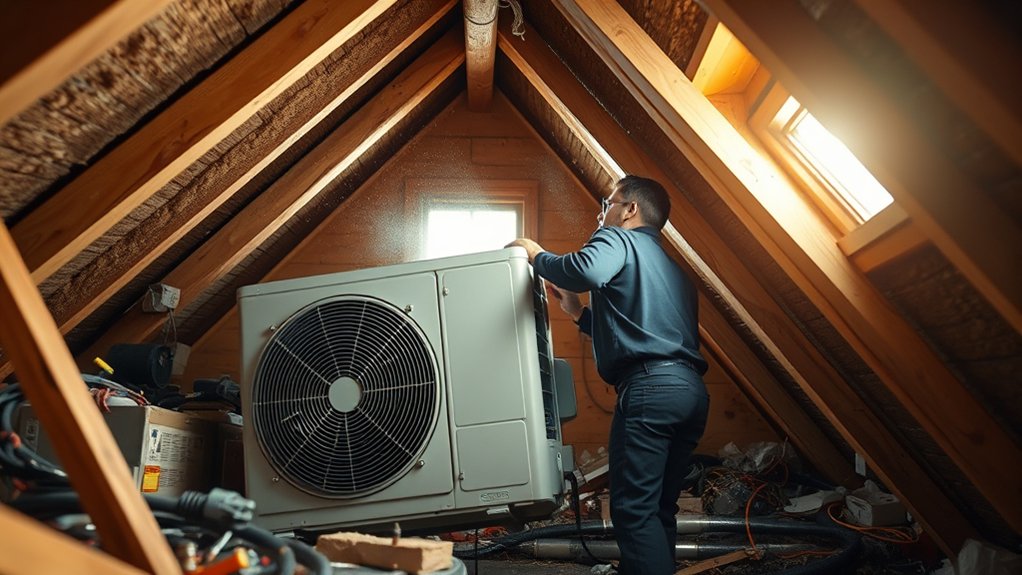
Since installation sites often present unique challenges, these factors can drive up your AC costs considerably. Limited access or complex housing configurations increase labor costs because specialized tools and extended time are needed.
Electrical upgrades and mechanical permits add to the total installation cost. Custom ductwork further raises labor expenses due to the complexity of installation.
| Challenge | Impact on Cost | Typical Range |
|---|---|---|
| Ductwork Modifications | Adds to labor & materials | $300 – $1,000 |
| Electrical Upgrades | Requires specialized work | Varies widely |
| Mechanical Permits | Mandatory for compliance | $75 – $500 |
Understanding these installation challenges helps you anticipate labor costs. This way, you can ensure accurate budgeting for your AC installation.
How Ductwork Impacts Your Total 3 Ton AC Cost
Modifications to ductwork represent a significant factor in determining your total 3-ton AC installation cost. The extent of ductwork modifications directly influences the overall project cost, ranging from minor $300 adjustments to complete new duct installations costing $2,000 to $4,000.
You should consider installation complexity. Limited access or unique layouts increase labor, which forms 30 to 50% of total costs.
Leaky ductwork impairs airflow and reduces your 3-ton AC unit’s energy efficiency rating. This can raise energy bills and increase repair needs.
Manual D design means properly engineered duct systems that optimize airflow, improve system performance, and minimize costly modifications.
Upgrading ductwork for a high-efficiency 3-ton AC unit may raise upfront costs, but it enhances long-term energy savings and reliability.
How Regional Labor Rates and Permits Affect 3 Ton AC Pricing

When you plan to install a 3-ton AC unit, regional labor rates play a critical role in determining your total cost. Labor typically accounts for 30–50% of the installation cost, varying from $60 to $150 per hour depending on your location.
Mechanical permits, required by local codes, add $75 to $500 to the installation. Skipping these permits risks warranty voids and code violations, which can increase long-term costs.
Understanding these factors helps with accurate homeowner budgeting and managing HVAC expenses.
| Factor | Cost Range |
|---|---|
| Regional Labor Rate | $60 – $150/hour |
| Labor % of Installation | 30% – 50% |
| Mechanical Permit | $75 – $500 |
| Total Installation Cost Variance | Significant |
| Risk of Non-Compliance | Warranty voids, code violations |
These elements critically influence AC unit pricing and total installation cost.
How Features, Upgrades, and Seasonal Trends Affect Your AC Budget
Although seasonal demand often drives AC installation costs higher during spring and summer, understanding how specific features and upgrades impact your budget is essential. When purchasing a 3-ton AC unit, seasonal trends can increase HVAC cost by 10-20%.
Moreover, consider these factors:
- Upgrades like high SEER2-rated units improve energy efficiency but raise initial costs from $3,500 to $5,000.
- Features such as smart thermostats ($100–$300) and whole-home humidifiers ($400–$1,000) enhance comfort yet add to the total cost.
- Installation complexity, including ductwork modifications ($300–$4,000), greatly influences expenses, especially with challenging home layouts.
Balancing these aspects helps you select a budget-friendly option that meets your comfort needs without unexpected costs.
Frequently Asked Questions
How Long Does a 3 Ton Air Conditioner Typically Last?
A 3-ton air conditioner typically lasts between 10 to 15 years. How long it actually lasts depends on a few things like how well it was installed, the climate you live in, and how often you use it.
Regular maintenance plays a big role in keeping your unit running longer. Getting it serviced on time helps reduce wear and tear on the parts, which means fewer problems down the line.
You might notice it works differently depending on the season, and that can affect how long it stays durable.
Checking the warranty can give you a rough idea of its expected lifespan, but taking good care of it and fixing issues quickly is key to making it last as long as possible.
What Maintenance Costs Should I Expect for a 3 Ton AC?
Think of your 3-ton AC like a finely tuned orchestra. Maintenance tips keep every part playing smoothly.
Expect annual inspections costing $100-$300, plus filter replacement every 1-3 months at $15-$50 each.
Cleaning coils professionally runs about $100-$200 yearly. Repair frequency varies, but warranty coverage can ease unexpected costs.
Balance DIY maintenance with professional servicing.
Prepare seasonally to optimize performance and manage your cost breakdown efficiently.
Are There Financing Options Available for Purchasing a 3 Ton AC?
Yes, you can explore various financing plans when purchasing a 3-ton AC, including credit options from loan providers or leasing agreements.
Payment terms vary, so you should evaluate interest rates, down payment requirements, and monthly payments carefully.
Considering your budget and the overall cost benefits really helps in choosing the best option.
It’s a good idea to compare unsecured personal loans, secured home equity loans, and manufacturer financing.
This way, you’re more likely to find terms that match your financial goals and make the purchase easier on your wallet.
How Do Utility Rebates Work for Energy-Efficient AC Units?
Don’t worry if the application process seems complex; utility rebates for energy-efficient AC units are designed to boost your utility savings while promoting energy efficiency.
You’ll need to meet eligibility criteria, such as purchasing a high-SEER unit and professional AC installation.
Local programs and seasonal rebates vary, so stay updated.
These rebates, combined with tax incentives, reduce upfront costs and lessen environmental impact.
Consumer awareness helps you navigate local programs and maximize benefits effectively.
Can a 3 Ton AC Unit Improve Indoor Air Quality?
Yes, a 3-ton AC unit can improve indoor air quality by enhancing air filtration and allergen control through advanced filters and UV lights.
It also helps regulate indoor humidity and temperature, which reduces mold and pollutant buildup.
Plus, efficient ventilation systems support pollutant reduction while keeping energy use low and noise levels down.
Regular HVAC maintenance is key to making sure everything runs at peak performance.
That way, you can enjoy clean air and comfortable conditions in your home without any hassle.
Conclusion
When choosing a 3 ton AC unit, remember that factors like system type, energy efficiency, and installation complexity directly impact your costs.
For example, upgrading to a high-efficiency model can reduce energy bills by up to 30%, saving you money long-term despite a higher upfront price.
Understanding how ductwork, labor rates, and regional permits influence pricing helps you budget accurately.
By considering these variables, you’ll make a well-informed decision tailored to your cooling needs and budget.