How to Clean Air Conditioner Filter in 5 Easy Steps
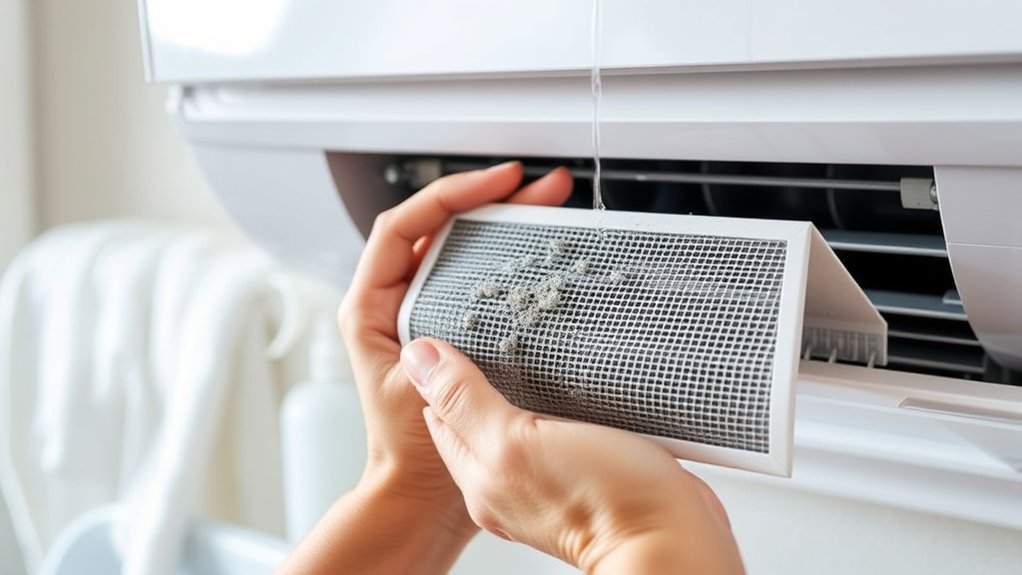
To clean your air conditioner filter in five easy steps, first turn off the AC unit to stop air circulation. Next, open the vented cover and gently remove the filter. Vacuum with a brush attachment to clear dust and debris.
If it’s heavily soiled, wash it using a vinegar-water mix or warm soapy water, then rinse thoroughly. Make sure to let the filter dry completely before reinstalling it for peak performance.
Following these steps helps maintain efficiency. And if you want, you can explore more details to enhance your AC care.
Signs Your AC Filter Needs Cleaning
Five key signs indicate that your AC filter needs cleaning.
First, increased dust buildup around your home means the air conditioner filter is likely clogged, reducing filtration efficiency.
Second, if you experience allergy symptoms such as sneezing or congestion, it signals the filter isn’t trapping allergens effectively.
Third, reduced airflow from vents points to a filter obstructed by dust or debris.
Fourth, a spike in energy use shows your AC unit is working harder due to a dirty filter.
Ultimately, strange noises from the AC system suggest it’s straining against a clogged filter.
To maintain peak performance, incorporate cleaning your filter into your routine and replace filters as needed to prevent damage and guarantee indoor air quality.
It’s really worth staying on top of this to keep your home comfortable and healthy.
Permanent vs. Disposable AC Filters: What to Know
Monitoring signs that your AC filter needs cleaning naturally leads to evaluating the type of filter you use. You’ll find two main options: permanent filters and disposable filters. Permanent filters are designed to be cleaned and reused, while disposable filters require replacement once dirty.
Consider these points: Permanent filters offer improved HVAC efficiency and air quality with regular maintenance and cleaning. Disposable filters degrade if cleaned with water and must be replaced to avoid mold and airflow issues.
Although permanent filters have a higher upfront cost, they save money over time by eliminating frequent replacement filters.
Follow manufacturer guidelines: clean permanent filters every 90 days and replace disposable filters regularly for peak performance.
Choosing the right filter type affects maintenance routines, system efficiency, and overall air quality in your home. It’s worth taking the time to pick the one that fits your needs best.
How to Safely Remove Your AC Filter
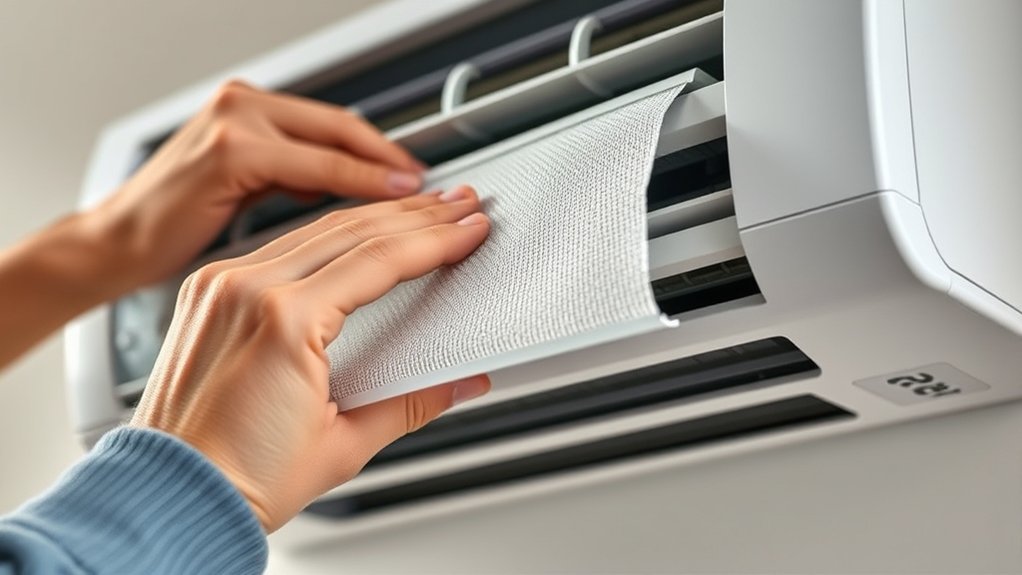
Before you start, make sure you turn off your AC unit at the thermostat to prevent it from running while you remove the filter.
Locate the air conditioner filter, usually near the cold air return or inside the blower unit. Gather necessary tools, such as a screwdriver, if the housing requires it.
Carefully slide or lift the filter out without shaking it to avoid dispersing dust particles, which can affect air quality. Once removed, inspect the filter thoroughly for damage or excessive dirt.
Remove the filter gently to prevent dust spread, then inspect it carefully for damage or dirt buildup.
If damaged, discard it and replace it accordingly.
After cleaning or replacing the filter, reinstall it in the correct orientation, ensuring it fits securely within the housing before closing the unit.
This process helps maintain ideal air quality and system efficiency.
Cleaning Your AC Filter in 5 Easy Steps
Start by turning off your AC unit to stop air circulation during the cleaning process.
Proper AC maintenance begins with careful handling of the air conditioner filter to guarantee efficiency and longevity.
Follow these steps for effective cleaning:
Remove the filter by opening the vented cover and gently pulling it out to avoid damage.
Vacuum the filter using a brush attachment to eliminate surface dust and debris.
Wash the filter with a vinegar-water mixture or warm soapy water if it’s heavily soiled, then rinse thoroughly.
Make sure to allow the filter to dry completely before you put it back.
These simple actions keep your air conditioner filter clean and functional.
Doing this regularly improves air quality and helps your system run better.
Reinstalling Your AC Filter for Best Performance
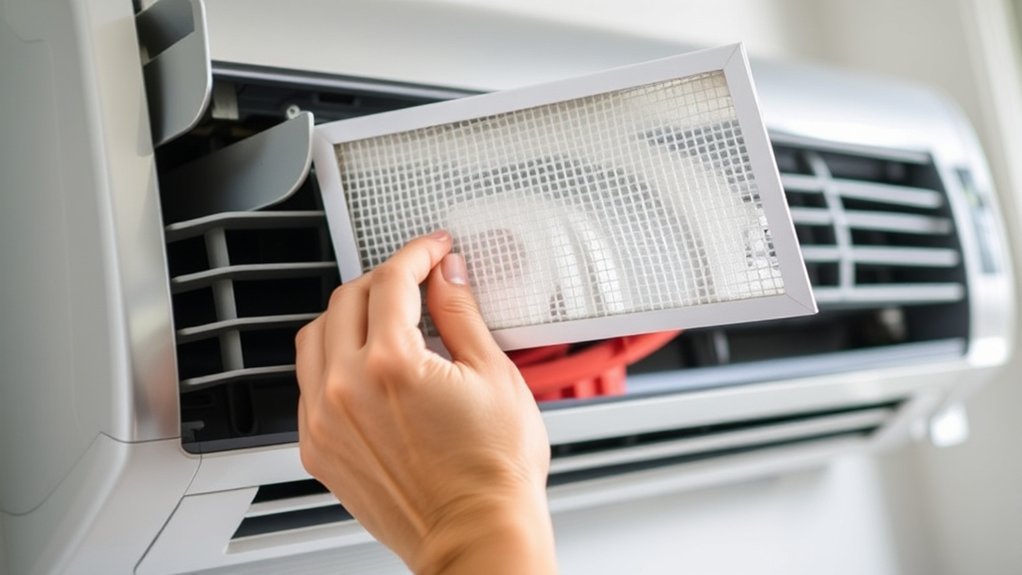
To reinstall your AC filter correctly, make sure it’s completely dry and free of damage such as holes or tears. Inspect the air filter carefully for any visible damage. If you find rips or holes, replace it to preserve system efficiency.
Next, align the filter according to the airflow direction arrows on its frame. This helps the filter work properly within the HVAC system.
Slide the filter into its slot, then secure it firmly behind the tabs to prevent air leakage. Make sure the filter sits flush and stable.
Improper reinstalling can reduce airflow and strain the system. Finally, close the vented cover or blower unit securely.
Following these steps will guarantee better airflow, maintain HVAC efficiency, and prolong your air filter’s lifespan after cleaning.
Frequently Asked Questions
How Often Should I Replace My Air Conditioner Filter?
You should replace your air conditioner filter every 30 to 90 days, depending on the type of filter you have and your maintenance schedule.
If you have pets or there’s a lot of dust in your home, you’ll need to change it more often. Keep an eye out for signs like visible dirt or reduced airflow—these mean it’s time for a change.
Seasonal changes and humidity levels also affect how long your filter lasts and the quality of your air.
Keeping your filters fresh not only helps your air quality but also lowers your energy bills and protects your HVAC system.
Try following some DIY tips along with your manufacturer’s guidelines. This will help you get the best performance and extend the life of your equipment.
Can I Use Soap to Clean My AC Filter?
Yes, you can use mild soap for filter maintenance, but always check your filter types first. Some filters react poorly to soap, so soap alternatives like vinegar or specialized cleaning tools may be better.
It’s a good idea to follow DIY cleaning methods regularly, matching cleaning frequency to your filter lifespan to optimize air quality impact.
Preventive care includes spotting filter replacement signs early. Proper cleaning and timely replacement guarantee your AC runs efficiently and maintains healthy airflow.
Taking care of your filter not only helps your AC but also keeps the air in your home fresh and clean.
What if My Filter Is Damaged During Cleaning?
Did you know 25% of HVAC inefficiencies stem from damaged filters? If your filter is damaged during cleaning, skip DIY filter repair and replace it immediately to avoid impacting air quality. Always inspect for signs of filter damage like tears or holes.
Follow the filter replacement frequency guidelines based on your filter types comparison. It’s smart to keep spares on hand to save money and avoid downtime.
Combine this with your seasonal cleaning checklist for better maintenance.
Also, consider professional cleaning services for ideal filter care. They can help ensure your system runs smoothly and efficiently.
Taking these steps will keep your air clean and your HVAC system healthy.
Does Cleaning the Filter Improve Energy Efficiency?
Yes, cleaning your air conditioner filter greatly improves cooling efficiency by enhancing airflow and HVAC performance.
Proper filter maintenance reduces strain on the system, leading to energy savings and cost reduction.
Regular seasonal cleaning prevents dust buildup, maintaining ideal air quality regardless of filter types.
This proactive approach also lessens the environmental impact by lowering energy consumption.
Stick to a cleaning schedule to maximize these benefits and extend your AC unit’s lifespan.
It’s a simple step that really pays off in the long run.
Can Dirty Filters Cause Health Problems?
Imagine a dense cloud of airborne allergens swirling inside your home, stirred up by dirty filters.
Yes, dirty filters can cause health problems by circulating indoor pollution. They can worsen allergy symptoms and even trigger respiratory issues like asthma.
Neglecting filter maintenance increases health risks from mold and bacteria growth. This directly affects your HVAC system’s ability to provide clean air.
Keeping filters clean reduces these environmental impacts.
Plus, it helps protect your respiratory health effectively. It’s a simple step that makes a big difference.
Conclusion
Now that you’ve mastered cleaning your AC filter in just five easy steps, you’ll notice your unit running like a well-oiled machine, almost as if it’s harnessing the power of a hurricane.
Regular maintenance not only boosts efficiency but also extends your system’s lifespan. Just make sure you don’t skip reinstalling the filter correctly, or all your hard work could go to waste.
Stay consistent, and your air conditioner will thank you with peak performance every time.