
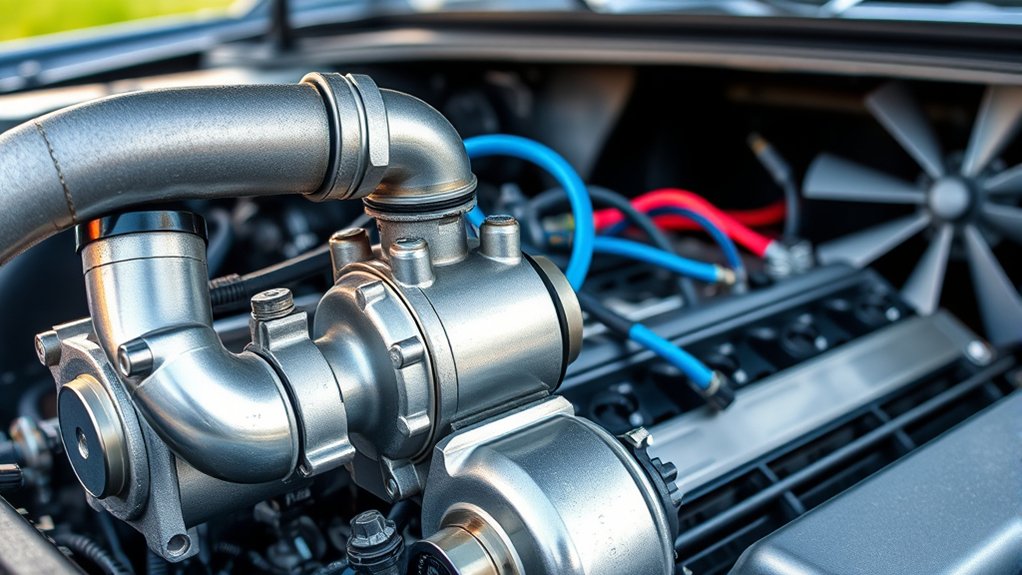
How Does a Car Air Conditioner Work Step by Step
Your car’s air conditioner works by compressing refrigerant gas into a high-pressure, high-temperature state using the compressor. This hot gas then flows to the condenser, where it cools down and condenses into a liquid.
Next, the expansion valve drops the pressure, cooling the refrigerant further before it reaches the evaporator. There, it absorbs heat from the cabin, cooling the air you feel.
Understanding each component’s role helps you recognize common issues and maintenance needs. It’s pretty neat how all these parts work together to keep you cool on the road!
How Refrigerant Cools Your Car’s Air
The refrigerant, typically R-134a, plays a crucial role in cooling your car’s air by continuously cycling through four key stages: compression, condensation, expansion, and evaporation.
As the refrigerant moves through the A/C system, the compressor pressurizes it into a high-temperature gas. This gas then travels to the condenser, where it releases heat and converts into a high-pressure liquid.
Passing through the expansion valve, the refrigerant undergoes a rapid pressure drop, cooling markedly before entering the evaporator. Inside the evaporator, the cold refrigerant absorbs heat from the warm cabin air, effectively lowering the air temperature.
This heat absorption results in cooled air being blown into your vehicle. By repeating this cycle, the refrigerant enables the A/C system to maintain a comfortable interior environment efficiently.
It’s pretty neat how this continuous process keeps things cool while you’re on the road.
What the AC Compressor Does in the Cooling Cycle
You rely on the AC compressor to compress low-pressure refrigerant gas into a high-pressure state. This process raises its temperature and keeps the cooling cycle moving along.
It works by using pistons or a scroll mechanism that’s driven by the engine belt, which helps maintain the flow of refrigerant through the system.
Without this compression, the refrigerant can’t effectively move to the condenser, and that throws off the whole cooling process.
Compressor’s Role Explained
One critical component you’ll find in every car’s air conditioning system is the compressor. It pressurizes refrigerant by converting it from a low-pressure gas to a high-pressure gas, which helps with efficient heat transfer.
In automotive air conditioning systems, the compressor acts like a pump that drives the cooling process. It maintains specific pressure levels that are essential for the system to work effectively.
The compressor runs via a belt connected to the engine and cycles on and off to regulate refrigerant flow based on the cabin temperature. This way, it keeps things comfortable inside the car.
Inside the compressor, the components need proper lubrication to reduce friction and wear. This is done by circulating oil mixed with the refrigerant.
Without this precise pressure control and lubrication, the compressor can overheat and get damaged. That would compromise the efficiency and lifespan of the entire air conditioning system.
Compressing Refrigerant Gas
Powered by a belt connected to the engine, the compressor mechanically compresses this refrigerant, raising its pressure and temperature, transforming it into high-pressure gas. This step is critical to drive the refrigeration cycle forward, enabling the refrigerant to release absorbed heat once it reaches the condenser.
By efficiently compressing refrigerant gas, the AC compressor guarantees a continuous flow through the system, directly impacting cooling efficiency.
Any malfunction in this process can disrupt the cycle, reducing the AC’s ability to cool effectively or causing system failure.
Impact on Cooling Cycle
Because the AC compressor drives the refrigerant through the system, it plays a crucial role in maintaining the continuous flow necessary for effective cooling. The compressor compresses low-pressure refrigerant gas from the low-pressure side into high-pressure refrigerant, raising its temperature and energy level.
This high-pressure refrigerant then flows to the condenser, where it cools and condenses into a liquid. Without the compressor’s pumping action, refrigerant flow would halt, stopping the entire cooling cycle.
So, you can see how important it’s for the system to work properly.
Key impacts of the AC compressor on the cooling cycle include:
- Initiating and sustaining refrigerant flow within a closed loop
- Generating high-pressure refrigerant essential for heat rejection in the condenser
- Cycling on and off via a clutch to regulate cabin temperature efficiently
Proper compressor function is fundamental for reliable air conditioning performance. Without it, the AC simply won’t keep you cool.
How the Condenser Lowers Refrigerant Temperature
When high-pressure refrigerant gas exits the compressor, the condenser quickly cools it by transferring heat to the outside air. The condenser, positioned at the front of your vehicle, functions like a radiator. It uses ambient airflow generated by driving or a fan to dissipate heat efficiently.
As the hot, high-pressure refrigerant passes through the condenser’s fins, it loses heat and pressure. This causes it to condense from a gas into a liquid state. This phase change is vital for the cooling cycle.
Proper airflow is essential. Any debris blocking the condenser reduces heat transfer efficiency, which can impair refrigerant cooling and overall air conditioner performance.
What the Expansion Valve or Orifice Tube Does
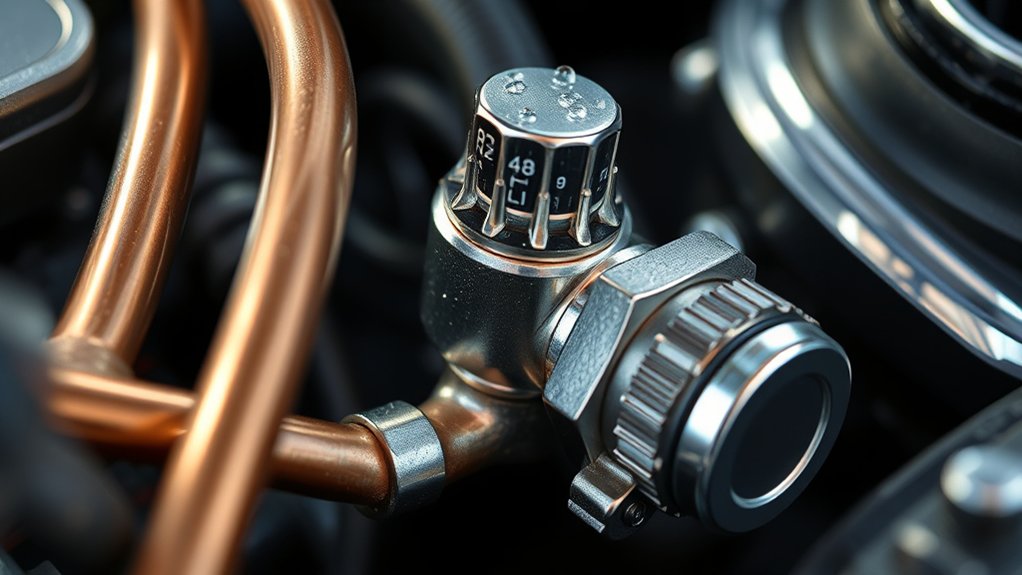
A vital component in your car’s air conditioning system is the expansion valve or orifice tube. This part controls the flow of refrigerant entering the evaporator. It creates a pressure drop that cools the refrigerant before it absorbs heat from the cabin air.
The expansion valve dynamically adjusts refrigerant flow based on cooling demand. This helps boost performance and cooling capacity. On the other hand, the orifice tube provides a fixed restriction, allowing the refrigerant to expand and vaporize as it enters the evaporator.
Both parts ensure the refrigerant is at the right pressure and temperature, which is essential for system efficiency. Their key functions include regulating refrigerant flow to maintain an ideal pressure drop, confirming the refrigerant enters the evaporator at the proper temperature, and preventing system issues by maintaining cooling capacity.
Regular maintenance is important because it prevents blockages that can reduce cooling and risk compressor damage.
How the Evaporator Cools Cabin Air
Although often overlooked, the evaporator plays an essential role in cooling your car’s cabin air by acting as a heat exchanger that absorbs heat from the interior environment.
Warm cabin air passes over the evaporator coils, where low-pressure refrigerant evaporates from liquid to gas, effectively absorbing heat.
This phase change allows the refrigerant to extract significant thermal energy, dropping the air temperature substantially.
The blower fan then circulates this cooled air back into the cabin, ensuring consistent and efficient cooling.
When functioning properly, the evaporator can reduce the cabin air temperature by as much as 30°F compared to outside air.
This precise heat absorption and air circulation process is critical for maintaining a comfortable interior environment during hot weather.
Why the AC Dryer (Receiver-Drier) Prevents Moisture Damage
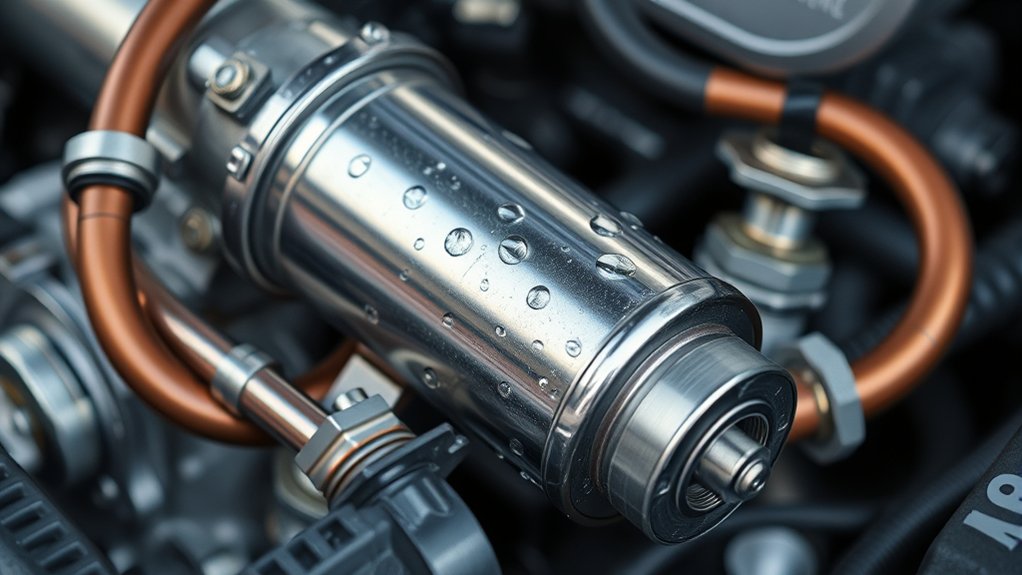
You count on the AC dryer to take moisture out of the refrigerant. This is really important because any water left inside can freeze, creating ice that blocks the flow and makes the system less efficient.
Inside the dryer, there’s a special desiccant material that soaks up all the water, making sure only dry refrigerant moves through the system.
On top of that, the AC dryer also catches debris. This helps protect key parts, like the compressor, from getting damaged.
Moisture Removal Function
Since moisture in the refrigerant can cause corrosion and ice formation that blocks the evaporator, the AC dryer (receiver-drier) plays an essential role by absorbing moisture using a desiccant material.
The desiccant inside the AC dryer captures moisture to keep the refrigerant dry, preventing ice buildup that could disrupt system function.
On top of that, the AC dryer acts as a filter, removing contaminants and debris that could reduce the system’s efficiency or damage components.
You rely on this component to maintain peak cooling performance and protect your air conditioner.
Key moisture removal functions of the AC dryer include:
- Absorbing moisture with desiccant material to prevent corrosion and ice formation
- Filtering contaminants to protect the compressor and other parts
- Maintaining refrigerant dryness to guarantee consistent cooling efficiency
System Protection Role
When moisture enters your car’s air conditioning system, it sets off a chain reaction that can severely damage critical components. The AC dryer, or receiver-drier, prevents this by using a desiccant material to absorb moisture from the refrigerant. This stops corrosion and ice formation.
Moisture can freeze inside the system, blocking refrigerant flow and risking compressor failure. The dryer also filters impurities, making sure only clean refrigerant circulates. This helps maintain peak cooling efficiency.
Plus, it acts as a storage reservoir, regulating refrigerant flow and pressure to protect the compressor. If the AC dryer malfunctions or becomes saturated, moisture buildup will reduce cooling efficiency and strain the compressor. That can lead to costly repairs.
Common AC Problems That Cause Warm Air or System Failures
Although car air conditioners are designed for reliable performance, several common issues can cause them to blow warm air or fail entirely. Low refrigerant due to leaks reduces cooling efficiency, and this often points to a leak somewhere in the system.
Compressor problems can also mess things up by disrupting refrigerant circulation and pressure, which leads to not enough cooling.
A blocked condenser is another culprit. It stops airflow and prevents proper heat dissipation, so your AC can’t cool down the cabin like it should.
Other frequent causes include a clogged expansion valve. This restricts refrigerant flow to the evaporator, which means warm air instead of cool.
A faulty blower motor might fail to push air through the evaporator, so you don’t get enough cabin cooling. Plus, debris can build up in the condenser, reducing the system’s ability to cool effectively.
Catching these problems early can save you from a complete system failure and keep your car’s AC working well. It’s always better to address these issues sooner rather than later.
Essential Maintenance Tips to Keep Your Car AC Running Smoothly
You’ll want to regularly check the refrigerant levels to keep your car’s AC cooling just right and avoid any potential damage to the system.
Also, don’t forget to inspect and replace the cabin air filters every 12,000 to 15,000 miles. This helps prevent airflow restrictions and ensures the air inside your car stays fresh and clean.
On top of that, it’s a good idea to take a look at the hoses for any signs of wear or leaks. Keeping everything sealed up means your AC will run smoothly and efficiently.
Regular Refrigerant Checks
Since refrigerant levels directly affect your car’s AC efficiency and compressor health, regular checks are crucial to detect leaks early and maintain ideal cooling performance.
Low refrigerant levels often indicate leaks, which can cause inefficient cooling and lead to costly compressor damage.
During refrigerant checks, technicians measure system pressure with precision gauges to verify it meets manufacturer specifications. This process guarantees peak performance and extends your AC system’s lifespan.
Regular maintenance, including these checks, prevents minor issues from escalating.
Key points for effective refrigerant checks:
- Identify and repair leaks to avoid refrigerant loss of 10-15% annually.
- Confirm use of appropriate refrigerant (R-134a or R-1234yf) for your vehicle.
- Maintain system pressure within specified limits to protect compressor function.
Filter And Hose Care
Proper filter and hose care plays a critical role in maintaining your car’s air conditioning system efficiency and longevity. Regularly replace the cabin air filter every 12,000 to 15,000 miles to guarantee clean airflow and prevent dust from clogging the system.
Make sure to inspect A/C hoses for wear, cracks, or leaks. Damaged hoses cause refrigerant loss and reduce cooling performance.
Use the specified refrigerant type, such as R-134a or R-1234yf, when recharging. This helps optimize function and meet regulations.
Check that O-rings are made from HNBR rubber, which is compatible with R-134a. This prevents refrigerant leakage at hose connections.
Also, maintain proper hose routing and secure fittings. Avoid kinks or bends that restrict refrigerant flow. This will keep your car’s air conditioner running at peak efficiency and durability.
How to Diagnose and Fix Minor AC Issues Yourself
Begin diagnosing minor AC issues by checking the refrigerant levels, as low refrigerant often signals leaks or the need for a recharge using R-134a or R-1234yf.
Next, inspect the cabin air filter for debris or clogs that restrict airflow and reduce cooling efficiency.
Listen closely to the compressor and blower fan. Unusual sounds like squealing or grinding may indicate mechanical problems.
To accurately diagnose and repair minor issues, start by searching for visible leaks around the compressor, condenser, and hoses.
Look for any oily residue that indicates refrigerant escaping.
Test the AC system on MAX AC and recirculate mode. If it’s blowing warm air, further troubleshooting is required.
Replace a dirty cabin air filter to restore proper airflow and cooling performance.
These steps help you pinpoint and fix minor AC problems before they worsen.
Taking a little time now can save you from bigger headaches later.
When It’s Time to Call a Pro for AC Repairs
How do you know when your car’s AC problems require professional attention?
If your A/C blows warm air, low refrigerant levels are likely the cause. This demands a professional diagnosis and recharge.
Unusual noises like squealing or grinding often signal compressor issues or debris in the system.
Only a technician can accurately assess these problems.
Persistent musty odors usually mean mold or bacteria buildup.
This requires thorough cleaning or component replacement by a pro.
Noticing moisture inside the vehicle suggests a clogged A/C drain line.
It’s important to address this promptly to prevent damage.
Also, if you haven’t had regular maintenance in over a year, it’s vital to schedule a professional inspection.
This helps guarantee peak operation and catch hidden problems early.
Don’t delay.
Precise professional repair safeguards your A/C’s longevity and performance.
Frequently Asked Questions
What Type of Refrigerant Is Best for My Car’s AC System?
You should choose refrigerant types based on your car’s manual, making sure the system is compatible to keep cooling efficiency at its best.
Newer options like R-1234yf have a better environmental impact because they’ve a lower global warming potential compared to R-134a. However, these newer refrigerants might cost more.
It’s important to follow maintenance tips to prevent leaks and damage. Using the recommended refrigerant helps balance performance and longevity, keeps costs reasonable, and protects the environment.
How Does the Car AC Affect Fuel Efficiency?
You’ll notice an AC load impact on fuel consumption because the compressor demands extra engine power, which reduces engine performance.
In stop-and-go city driving, this effect becomes even more noticeable and increases fuel use.
Efficient climate control means using the AC wisely and keeping your system well maintained.
Make sure to check refrigerant levels regularly and clean filters to minimize strain on your engine.
Also, adjust your AC settings based on driving conditions.
Using ventilation instead of MAX AC can help improve fuel efficiency and reduce unnecessary engine load.
Can Car AC Systems Use Eco-Friendly Refrigerants?
Yes, car AC systems can use eco-friendly options like R-1234yf. This refrigerant type has a much lower environmental impact than older gases.
You’ll notice efficiency ratings remain high while meeting legislative changes in Europe and the U.S.
However, system maintenance needs specialized equipment and training to handle these refrigerants safely.
How Long Does a Car AC System Typically Last?
You can expect your car AC system to last around 10 to 15 years. But keep in mind, factors like how often you use it each season and the environmental conditions around you play a big role.
Regular maintenance, like getting refrigerant recharges and performance checks, really helps prevent common issues such as compressor failure.
If you neglect upkeep, you might end up facing costly replacement bills sooner than you’d like.
So, stay proactive with things like filter changes and leak inspections.
Doing this will maximize the system’s longevity and keep your vehicle cooling efficiently throughout its lifetime.
What Are the Signs of Refrigerant Leaks in a Car AC?
You’ll notice signs of a refrigerant leak like weak airflow, hissing noises, or oily residue near AC parts.
Detection methods include UV dye or electronic leak detectors. Addressing leaks promptly with repair options like seal replacement prevents costly damage and maintains efficiency.
Regular maintenance tips involve checking pressures and system integrity.
Keep safety concerns in mind because refrigerant exposure can be harmful. Ignoring leaks increases repair costs and reduces your car AC’s lifespan.
Conclusion
Now that you understand how each component, from the compressor to the evaporator, works together to cool your car’s air, you’re better equipped to spot issues early. It’s no coincidence that regular maintenance keeps your system efficient and prevents costly repairs.
By diagnosing minor problems yourself, you save time and money. But remember, when complexity escalates, calling a pro guarantees precision and safety. That way, you preserve your car’s comfort and performance on every drive.