How Do You Recharge a Home Air Conditioner in 3 Easy Steps?
To recharge your home air conditioner, first get your unit ready by replacing the air filter, cleaning coils, and making sure the condenser fan and electrical connections are working properly. These steps help your system run smoothly before you add refrigerant.
Next, measure refrigerant levels using pressure gauges. Check for leaks and keep an eye on the sight glass for bubbles. This helps you know if your system is low or has a problem.
Finally, add refrigerant slowly into the suction line while watching the pressure and temperature. This way, you avoid overcharging the system. Follow these steps carefully, and you’ll keep your air conditioner running at peak efficiency. Keep going to find detailed tips and safety measures.
Get Your A/C Ready for Recharging
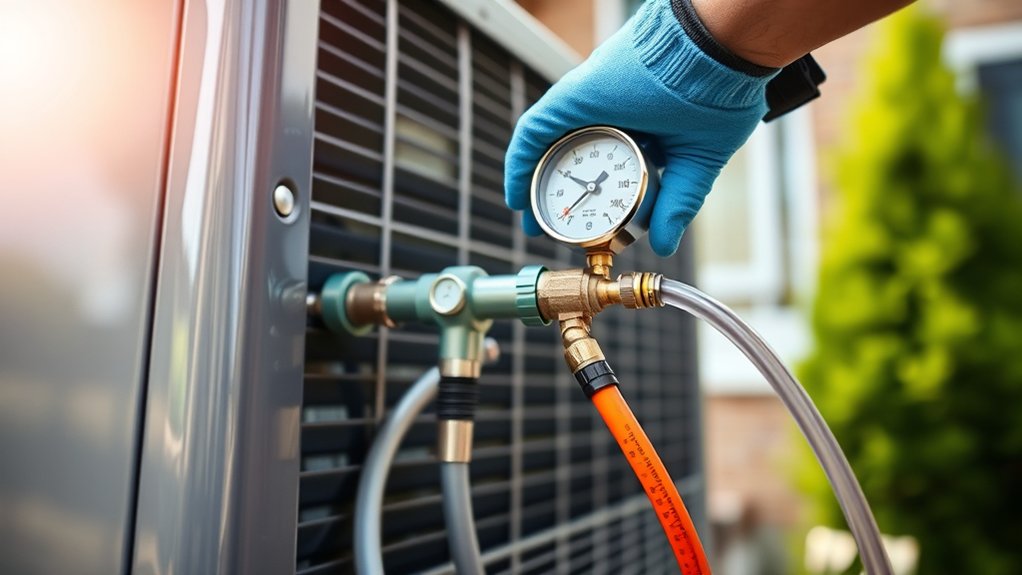
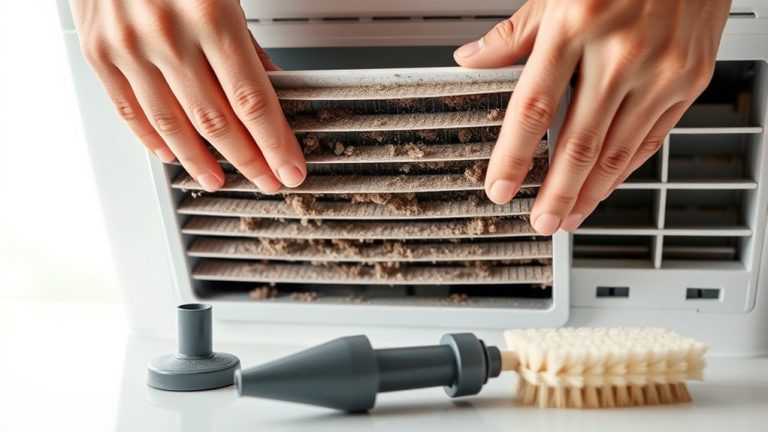
Before you recharge your home air conditioner, make sure to replace the air filter. This helps keep airflow optimal and the system running efficiently. Routine maintenance is key before adding any refrigerant.
Replacing the air filter ensures optimal airflow and efficiency before recharging your home air conditioner.
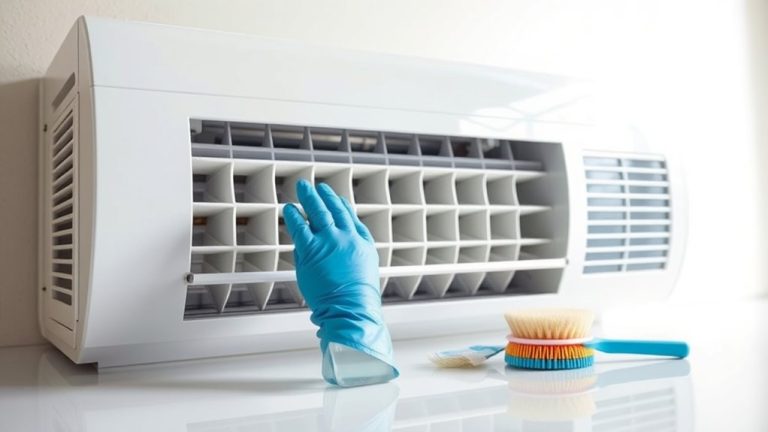
You’ll want to clean the evaporator and condenser coils thoroughly. Doing this prevents inaccurate readings of refrigerant levels and helps the system perform at its best.
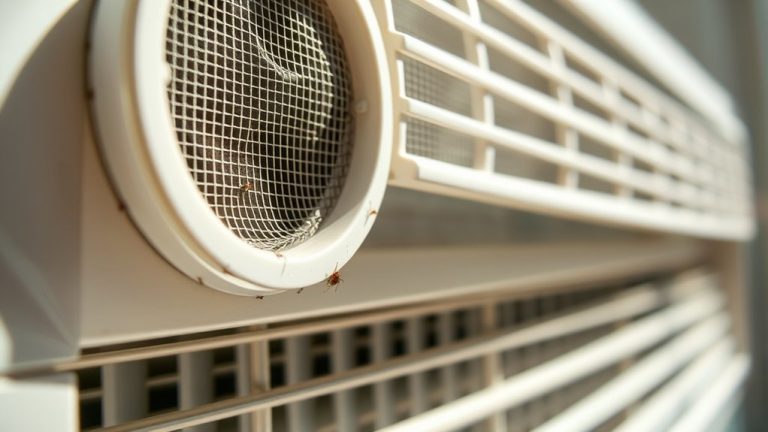
Also, check around the unit for any obstructions. Make sure the condenser fan is working properly because it affects cooling performance.
It’s a good idea to inspect insulation, look for duct leaks, and check electrical connections too. Keeping these in good shape supports the whole system’s integrity.
Don’t forget to review your equipment’s operating guide to confirm the correct refrigerant type, whether it’s R-22 or R-410A, especially if you have an older unit.
And if you’re installing a new system or facing ongoing issues, consulting HVAC technicians is definitely a smart move.
Measure Refrigerant Levels and Detect Leaks (And How to Respond)
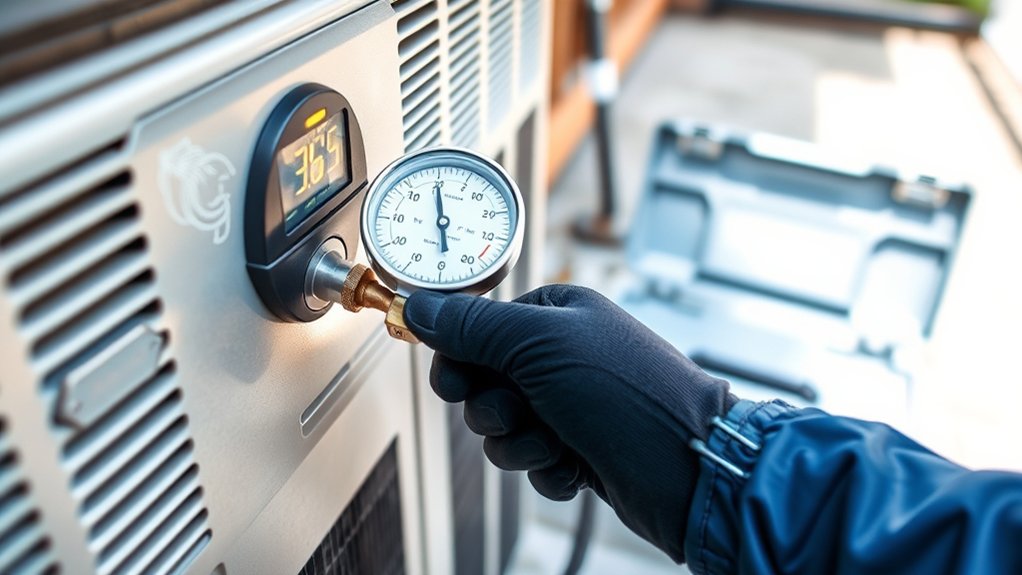
Once the system is clean and all components are functioning properly, you can move on to measuring refrigerant levels. Use pressure gauges to measure refrigerant levels accurately, making sure the blue gauge shows proper low-pressure readings.
Turn on the AC system and wait 15 minutes for stabilization before taking measurements.
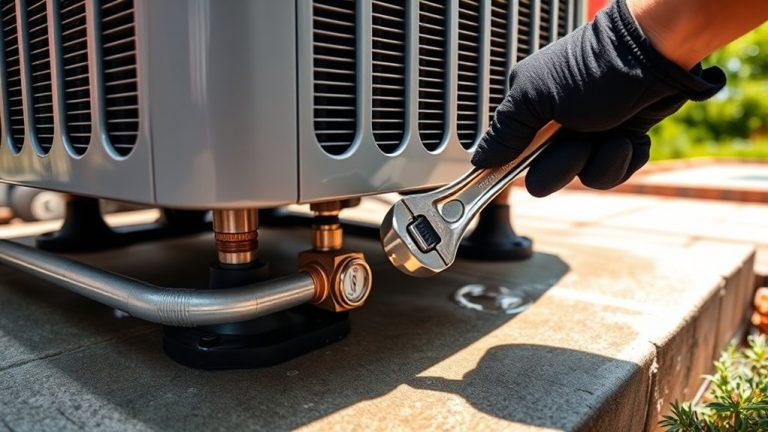
Inspect for leaks carefully at welded joints, pressure ports, threaded connections, and areas where refrigerant lines touch other components. Check the sight glass for bubbles—these signal that a recharge might be needed.
If you detect any leaks, repair them immediately to prevent refrigerant loss and keep your system running efficiently.
Regular maintenance is key. By doing thorough inspections and taking precise measurements, you’ll help optimize your AC system’s performance and avoid costly repairs down the line.
Add Refrigerant Slowly While Monitoring A/C Pressure
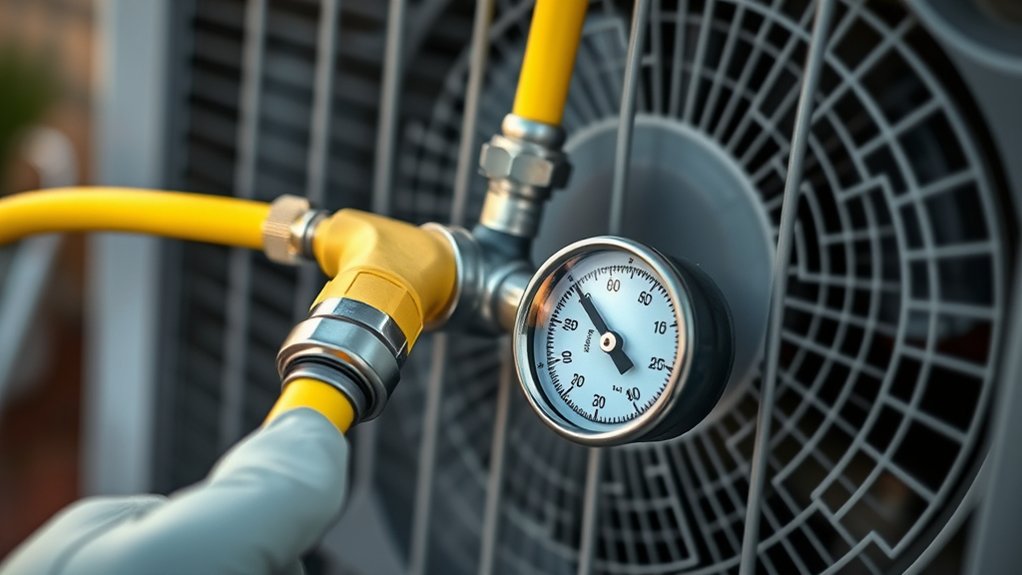
Begin adding refrigerant slowly into the suction line, allowing 5 to 10 minutes between each addition to let the system stabilize and prevent overcharging.
Use pressure gauges to monitor the HVAC system’s low-pressure side continuously. A drop in pressure signals the need for more refrigerant, while stable readings indicate adequate charge.
Employ a digital thermometer to verify that the temperature on the low-pressure side corresponds with the expected range for your home air conditioner’s current pressure.
After each refrigerant addition, recheck both pressure and temperature to confirm the system achieves peak cooling efficiency.
This careful, measured approach guarantees your seasonal HVAC system operates within manufacturer specifications, maintaining reliable performance and extending the lifespan of your air conditioners.
Taking it slow really pays off in the long run.
Frequently Asked Questions
What Tools Do I Need to Recharge My Home Air Conditioner?
You’ll need pressure gauges and charging hoses to measure and control refrigerant flow accurately.
Choose the correct refrigerant types based on system compatibility to avoid damage. Use leak detection tools to identify any issues before charging.
It’s also a good idea to check seals and other parts to prevent future leaks. Keeping up with maintenance helps your system run smoothly.
If you’re doing this yourself, make sure to monitor pressure readings carefully throughout the process.
That way, you can recharge your home air conditioner efficiently and safely.
How Often Should I Recharge My Air Conditioner?
You should recharge your air conditioner only when signs of leaking appear. Frequent recharging harms cooling efficiency and increases energy consumption.
Different refrigerant types require specific handling, so DIY methods carry risks. Proper maintenance tips like inspecting coils and seals help avoid unnecessary recharges.
Usually, recharging occurs every few years, but cost factors and system condition influence this. Keep an eye out for leaks and address them promptly.
Doing this helps maintain peak performance and reduces long-term expenses. Taking care of your AC means it runs better and saves you money over time.
Can I Recharge My A/C Without Professional Help?
You can attempt a DIY A/C recharge, but you need to know your refrigerant types and follow troubleshooting basics carefully.
Watch for signs of leaks and common issues like low pressure or ice buildup so you don’t make things worse.
A good tip is to recharge only when necessary and never mix different refrigerants.
Remember, handling refrigerants improperly can harm the environment and damage your system.
So, it’s often best to consider professional help.
They can provide safe, compliant service and give you an accurate diagnosis for your home unit.
What Type of Refrigerant Is Compatible With My System?
You might think any refrigerant type works, but checking compatibility is essential. Consult your system specifications or the unit’s label to find out which refrigerants are approved, like R-410A or R-22.
Using the correct refrigerant ensures your system runs efficiently and helps prevent leaks that can harm the environment.
Ignoring regulatory guidelines can void warranties and lead to legal trouble. So, it’s really important to match the refrigerant type to your system.
This way, you protect your equipment and reduce environmental impact.
Are There Safety Precautions When Handling Refrigerants?
Yes, refrigerant safety is essential. You must follow strict handling precautions, including wearing personal protective gear like gloves and goggles.
Always perform leak detection before and after charging to prevent environmental impact.
Make sure you know the proper disposal methods for old refrigerants and have emergency procedures ready in case of accidental release.
Avoid mixing refrigerant types to protect your system. These steps guarantee safe, compliant handling and minimize risks to you and the environment.
Conclusion
Recharging your home air conditioner doesn’t have to be an intimidating task. By preparing your A/C, accurately measuring refrigerant levels, and adding refrigerant slowly while monitoring pressure, you’ll keep your system running smoothly.
Remember, think of your A/C like a delicate dance. Too much or too little refrigerant throws off the rhythm. Just follow these precise steps to guarantee efficient cooling and avoid costly repairs down the line.